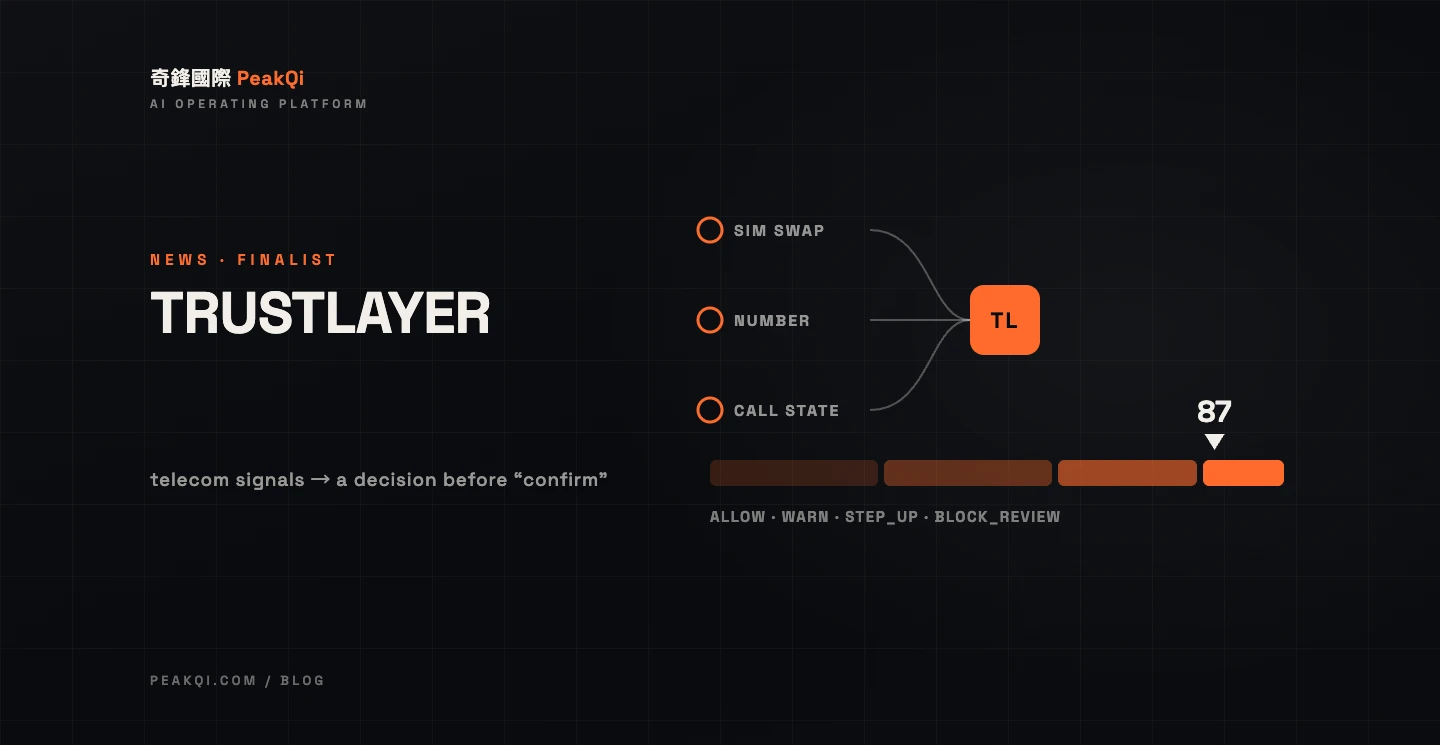
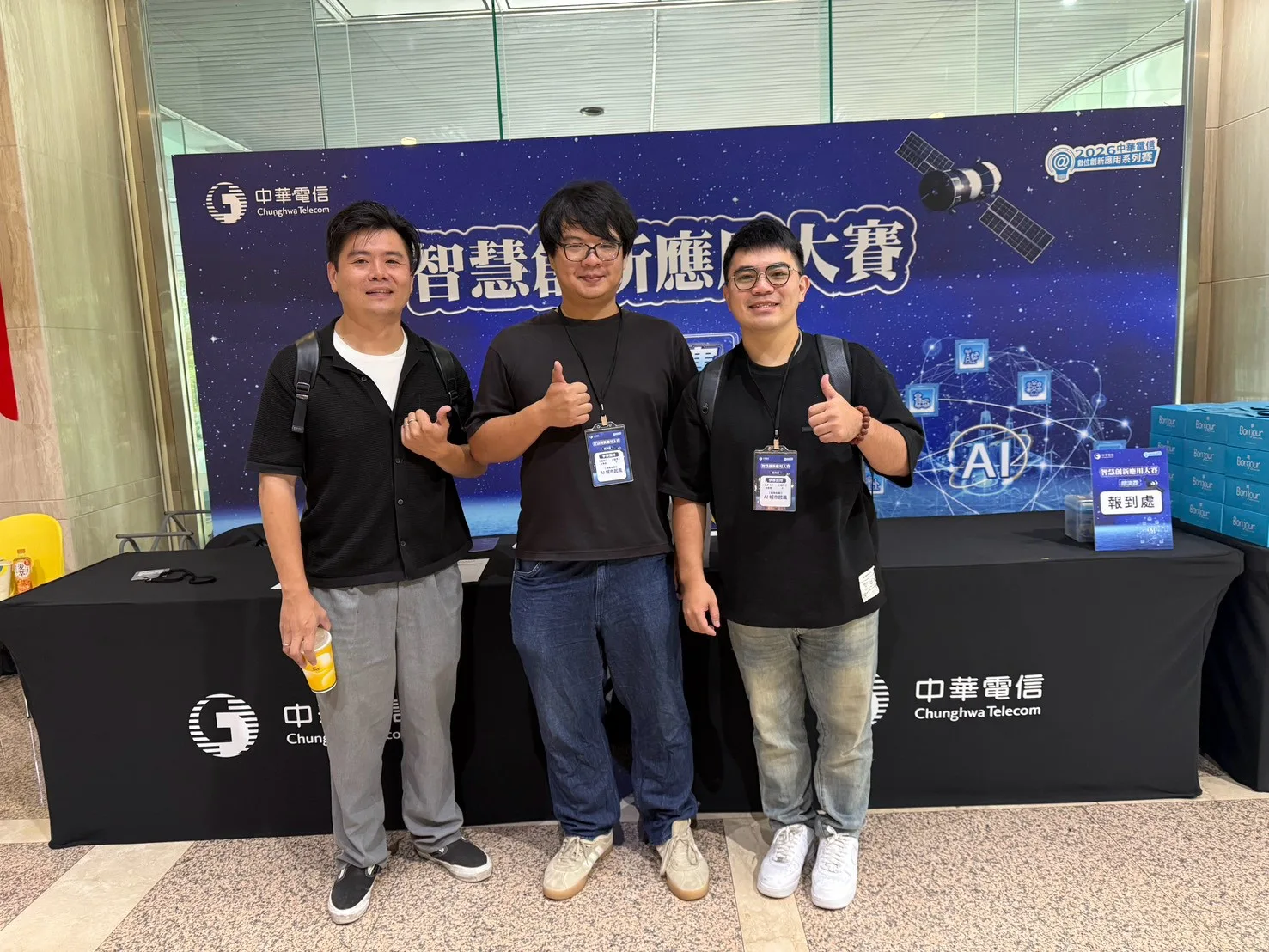
On 31 October 2026 the final of the 2026 Chunghwa Telecom Smart Innovation Competition was held at Chunghwa Telecom's headquarters in Taipei. PeakQi's team, entered as "AI城市起風" in the professional (non-student) track under the Smart Finance theme, passed the written first round with TrustLayer and presented in the final, receiving the organiser's finalist team award. TrustLayer is a decision layer that sits on top of telecom network capabilities: it combines signals such as SIM swap, number verification, roaming and call state with platform behaviour — logins, orders, payout-account changes — and returns a 0–100 score, reason codes and a recommended action, so small online shops and marketplaces without a risk team can stop a risky action before the user taps "confirm". Each finalist had 15 minutes: a 10-minute presentation and demo, then 5 minutes of questions from the judges.
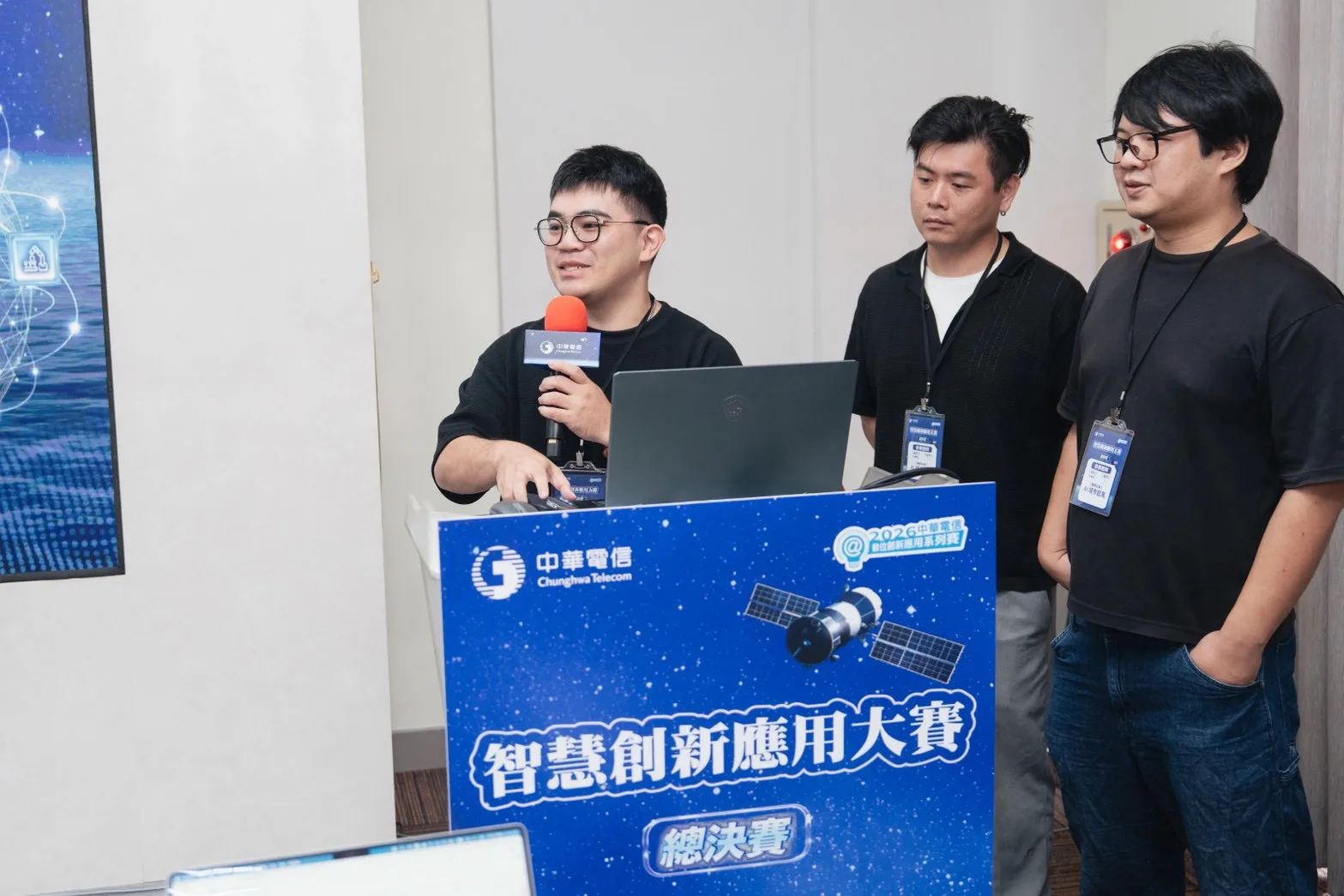
The competition
The Smart Innovation Competition is organised by Chunghwa Telecom and run by Smartfun Digital Technology. This year's themes were "AI-driven, digitally resilient, sustainable": teams were asked to combine AI, data, cloud and Chunghwa Telecom's core network capabilities into applications with real market potential. In 2026 it ran alongside the 5G Accelerator programme and the FunPark picture-book award as Chunghwa Telecom's Digital Innovation Series (Business Next coverage).
| Item | Detail |
|---|---|
| Organiser / operator | Chunghwa Telecom / Smartfun Digital Technology |
| Tracks | Student and professional (teams of 1–6) |
| Themes | Culture, manufacturing, healthcare, environment, transport, finance, living, communications — one per entry |
| First round | Entries closed 18 September 2026; written review of the proposal; finalists announced 16 October |
| Final | 31 October 2026, Chunghwa Telecom headquarters; 10-minute presentation and demo, 5-minute Q&A |
| Final scoring | Technical maturity 40%, commercial value 40%, fit with Chunghwa Telecom's business 10%, sustainability 10% |
Details follow the official competition site and rules.
The problem: telecoms can see the anomaly, merchants can't use it
According to Taiwan's 165 anti-fraud dashboard, fraud losses in Taiwan reached NT$89.326 billion in 2025 across 162,000 reported cases. In December 2025 online-shopping fraud was the most-reported scheme, with 4,140 cases averaging about NT$76,000 each. These scams are small, frequent and happen on platforms — they never pass a bank teller's check or a large-transfer alert.
Meanwhile telecom operators have opened network APIs under GSMA Open Gateway and the CAMARA specifications — SIM swap, number verification, device roaming status. Three gaps remain:
- Signal: each API returns a single fact ("this SIM changed recently"); the merchant still has to work out what that means right now.
- Decision: turning signals into "allow or stop" needs models, thresholds and an audit trail, which small platforms can't build.
- Channel: existing services target banks through bespoke institution-to-institution integrations measured in months; long-tail merchants can't plug in.
TrustLayer doesn't rebuild the signals. It adds the decision layer on top, and a channel merchants can actually connect to.
How TrustLayer works
Each request looks at three kinds of data: telecom signals (SIM swap, number verification, number tenure, roaming and location, call forwarding, device identity, scam-call indicators), platform behaviour (new device, unusual amount, changed payout account, the sequence of events for the same member) and public intelligence such as the 165 list of fraudulent websites. Rules score first; a machine-learning model can only raise the score, never lower it. The output is a score, reason codes and a recommended action.
| Score | Action | What the merchant does |
|---|---|---|
| 0–29 | ALLOW | Proceed as normal |
| 30–59 | WARN | Warn the user or flag for attention |
| 60–84 | STEP_UP | Extra verification or a delay |
| 85–100 | BLOCK_REVIEW | Stop before payment, send to manual review, notify |
Design rules we held to:
- Unknown is not safe. If a telecom signal can't be fetched it is recorded as UNKNOWN and scoring continues — it is never treated as normal.
- No SMS codes after a SIM swap. If the SIM was just swapped, the code goes to the attacker, so step-up uses another method.
- Minimal disclosure. Responses only say whether something is anomalous — no swap date, operator or country — and phone numbers are stored only as salted hashes.
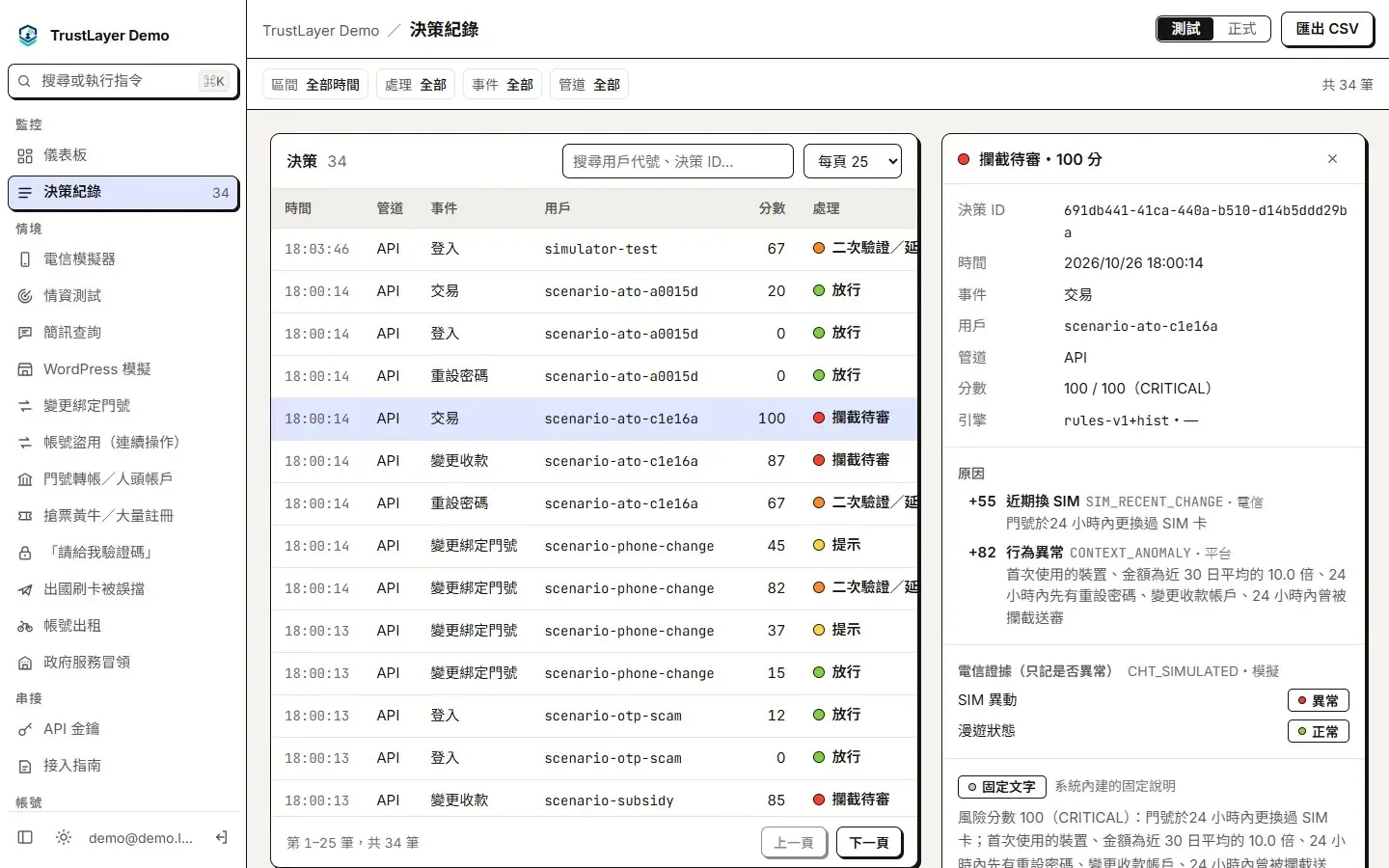
- Every decision is traceable. The log keeps the score, reason codes and telecom verdict, and merchants can report outcomes (fraud or legitimate) to keep calibrating.
Merchants connect in one of three ways: a WooCommerce plugin, a JavaScript SDK, or a REST API with webhooks, plus a merchant dashboard for metrics and the decision log. The risk engine runs on FastAPI with a P95 latency target of 300 ms.
What we showed in the final
In ten minutes we covered the problem and business model, then ran a two-minute live demo. The scenario: "Auntie Chen" is on a suspected scam call with call forwarding switched on, and at the same time uses a new phone to buy a NT$10,000 gift card in a WooCommerce demo shop. The telecom side — Chunghwa Telecom signals simulated from the public CAMARA specs — reports the anomaly; TrustLayer returns 87, BLOCK_REVIEW, and the order stops before payment while the dashboard shows the reason codes and telecom evidence. Judges could also swap the number or the event on the spot and watch the score change.
For technical maturity we ran a regression suite of 42 designed scenarios (normal, attack, telecom failure). All 42 produced the intended action. Of 21 attack scenarios, 10 moved to step-up or block because of telecom signals; of 15 normal ones, only 1 was affected, and only with a warning. These use simulated telecom signals and hand-built scenarios: they show the rules behave as designed, not real-world fraud reduction, which has to be measured on live pilot data.
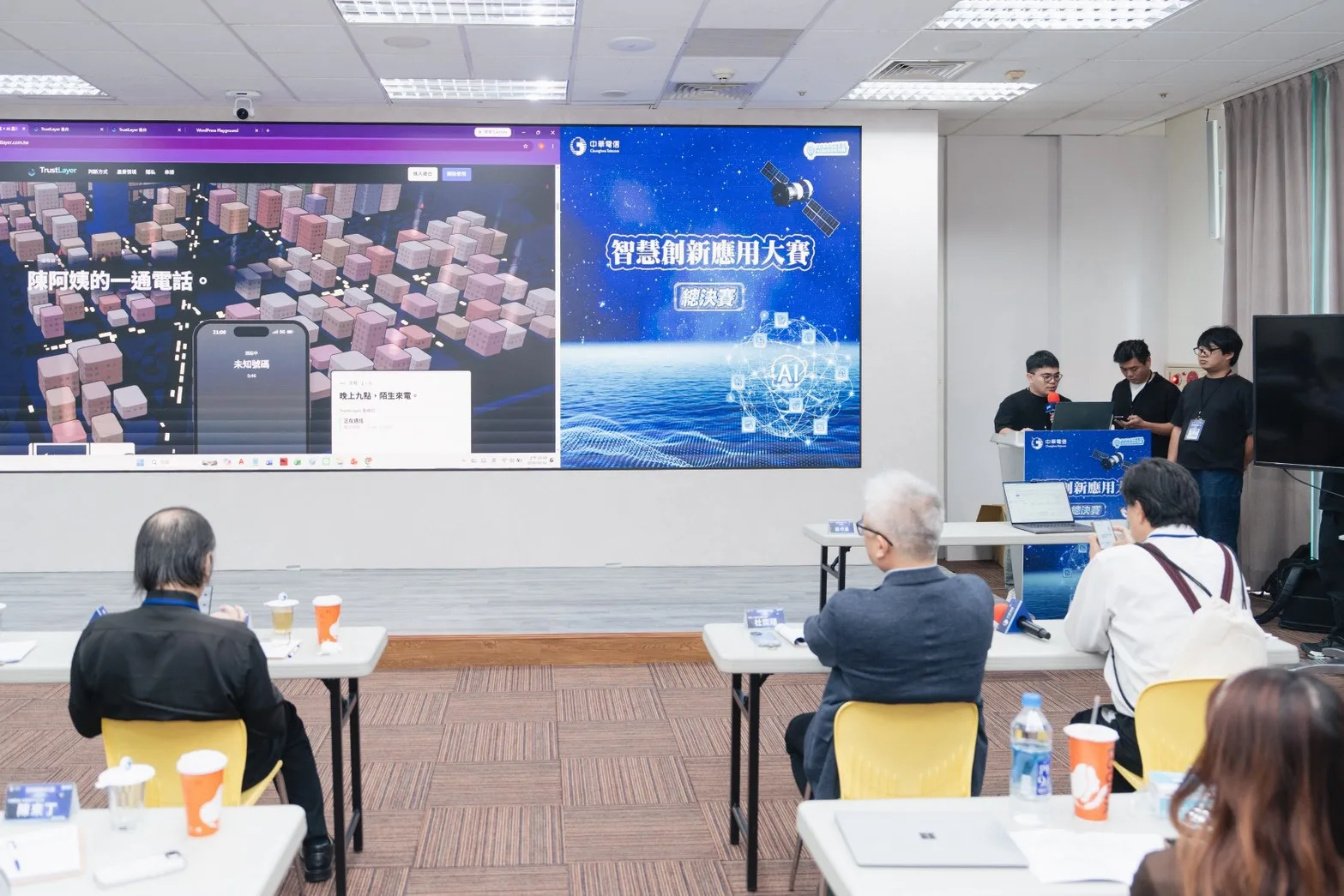
The team: AI城市起風
AI城市起風 is PeakQi's team — the same name we used to win the Land Office track at New Taipei's AI Smart City Hackathon in September 2026. PeakQi was founded in 2024 and focuses on AI adoption for small and mid-sized businesses, from scoping to build to iterating after launch, with 30-plus systems shipped, including payment integrations and e-commerce checkout flows (case studies).
Most of TrustLayer's design calls come from that work: small merchants have no risk team and no months to spend on integration, so the product has to be "install a plugin, connect in half a day, understand the reason". It is the same approach we take in every AI project — the system proposes and flags what needs a human look, and a person makes the call.
What's next
TrustLayer's telecom signals are currently simulated from the public CAMARA specifications; we do not yet work with any operator. The next step is connecting to operators' production Open APIs and running a closed pilot with three platforms to calibrate thresholds and recall on real data. The system isn't open for public demos yet. If you run an online shop, second-hand marketplace, ticketing or rental platform and are dealing with account takeover, mule accounts or fake buyers — or want to see what kind of AI solution fits your own workflow — let's find a time to talk.
Frequently asked questions
Q: How is TrustLayer different from existing telecom anti-fraud APIs? Existing telecom APIs return a single fact, such as a SIM swap date, leave thresholds to the caller and mainly serve banks. TrustLayer fuses several signals into a score, reason codes and four action levels, and connects through a plugin, SDK or REST API in about half a day, aimed at small platforms and long-tail merchants.
Q: Does TrustLayer use real Chunghwa Telecom data today? No. Telecom signals are simulated from the public CAMARA specifications, and the GSMA sandbox is also supported. We do not yet work with Chunghwa Telecom or any other operator. The telecom source is a swappable adapter, so production APIs can replace the simulator directly.
Q: What does AI do inside TrustLayer? Rules calculate the score first, and every point maps to a reason code. A machine-learning model can only raise the score, never lower a risk the rules found. That keeps every decision explainable to users and reconstructable in a dispute.
Q: How does a small online shop connect? WooCommerce shops install the plugin and check before payment. Marketplaces use the JavaScript SDK or REST API at sign-up, phone-number changes and payouts. Onboarding is: sign in, create a test key, try requests in the telecom simulator, then apply for a live key.
By the PeakQi team. Competition details follow the official Chunghwa Telecom Smart Innovation Competition site and rules; product details reflect the version shown at the final on 31 October 2026. Published 2026-11-14.